Category: <span>Uncategorized</span>

Uncategorized

SAFE-6G Deliverable 3.3

The SAFE-6G project has released Deliverable D3.3, “User-centric Distributed 6G Core,” presenting the final technical developments of the project’s distributed 5G/6G core infrastructure.

The deliverable documents how the different technologies, modules and interfaces of the SAFE-6G packet core have been brought together to support the project’s vision of trustworthy, user-centric 6G services, including the infrastructure required for validation through the SAFE-6G Metaverse use cases.

A central objective of the work has been to evolve the traditional 5G Core towards a more distributed, cloud-native and programmable architecture capable of supporting future 6G functionality. Among the implemented developments are containerised signalling and user-plane components, Kubernetes-compatible deployment, interfaces for AI/ML integration through the Network Data Analytics Function (NWDAF), enhanced Network Exposure Function (NEF) capabilities and support for multiple User Plane Function configurations.

An important aspect of D3.3 is the implementation of SAFE-6G across both commercial and open-source core network environments. Alongside the Cumucore platform, the project uses and extends Open5GS, enabling the SAFE-6G architecture to be evaluated in an open and standards-compliant environment. This approach demonstrates that the project’s trust mechanisms, AI-driven functionality and network exposure capabilities are not tied to a single vendor implementation.

SAFE-6G has also developed two key APIs through the Open5GS Network Exposure Function: the NEF Monitoring Event API, which enables authorised applications and trust components to securely access network monitoring information, and the NEF AsSessionWithQoS API, which allows applications to request specific Quality of Service requirements for individual application sessions.

The open-source implementation, documentation and deployment resources for these APIs have also been made available through the SAFE-6G software repositories, supporting further experimentation and reuse.

Overall, D3.3 marks an important step in SAFE-6G’s transition from 5G core capabilities towards an AI-enabled, distributed and interoperable 6G core architecture. The final implementation across both Cumucore and Open5GS strengthens portability and interoperability while providing the network foundation needed for the project’s trust-aware services and future validation activities.

Find it online: https://safe-6g.eu/wp-content/uploads/2026/09/D3.3_SAFE-6G_V1.0.pdf

Uncategorized

SAFE- 6G Deliverable 3.4

SAFE-6G has released Deliverable D3.4, “Infrastructure Openness, Monitoring and Programmability,” presenting the final software developments that enable applications and SAFE-6G trust components to securely interact with the project’s underlying network, edge-cloud and Metaverse infrastructure.

The deliverable reports the final outcomes of Task 3.3, bringing together the interfaces and software components developed to expose network capabilities through standardised and project-specific APIs. These interfaces connect the user-centric 5G/6G Core, Edge-Cloud Continuum and Metaverse platform, creating a common foundation for monitoring, infrastructure control and programmable service operation.

At the network level, SAFE-6G provides APIs for both the Cumucore and Open5GS core implementations. These allow authorised components to retrieve monitoring information, interact with network configuration and securely access network capabilities. The Open5GS implementation additionally exposes project-specific NEF functionality while preserving the principles of the 3GPP Service-Based Architecture. 

D3.4 extends this openness beyond the network core. APIs developed for the Edge-Cloud Continuum provide access to orchestration, context and monitoring capabilities, while interfaces for the Metaverse platform enable interaction with immersive applications, digital twins and XR services. The deliverable reports, for example, an XR monitoring capability able to retrieve 92 performance metrics through integration with the CloudXR client environment.

A particularly important outcome is the integration of OpenCAPIF as SAFE-6G’s common API exposure framework. Through OpenCAPIF, services can be securely registered, discovered and accessed across different infrastructure domains. SAFE-6G has further developed the Open Network Exposure Function (O-NEF), which provides an abstraction layer between standardised API exposure and network-specific functionality. Significantly, the O-NEF extension has already been approved by ETSI SDG OCF for inclusion as a new module in a future OpenCAPIF release.

Together, these developments establish a secure, interoperable and standards-based interface through which the SAFE-6G Cognitive Coordinator, Trust Functions and authorised applications can discover and interact with services throughout the infrastructure.

Find it online:  https://safe-6g.eu/wp-content/uploads/2026/09/D3.4_SAFE-6G_V1.0.pdf

Uncategorized

Open Community Experience (OCX) 2026

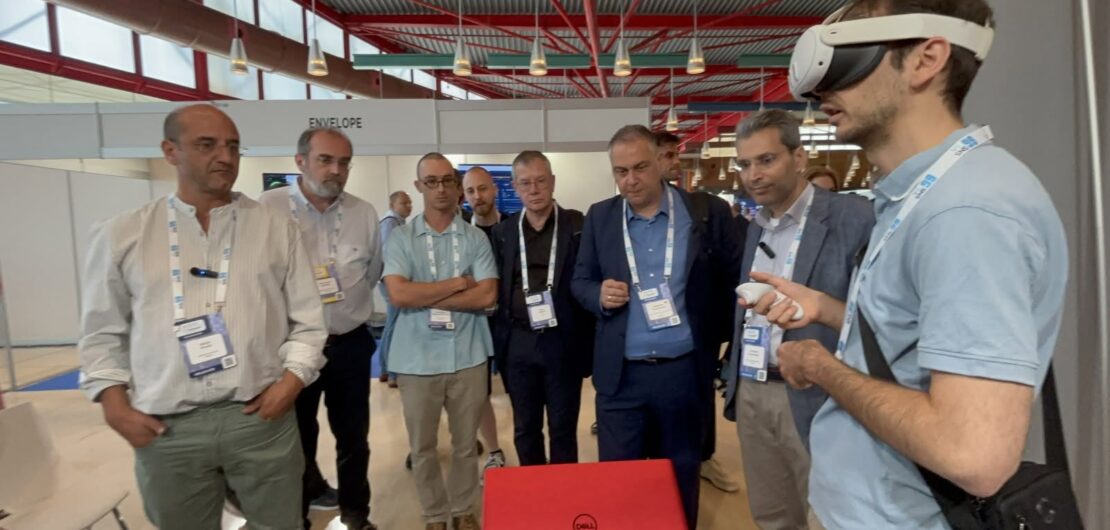
The Open Community Experience (OCX) 2026 is the Eclipse Foundation’s flagship open-source conference, bringing together developers, researchers, industry leaders, policymakers, and EU-funded projects to explore the latest advancements in open-source technologies. Held in Brussels, the event features dedicated tracks on AI, cloud and edge computing, automotive, compliance, developer tooling, and research, fostering collaboration between academia, industry, and open-source communities. As a key platform for showcasing innovative European research, OCX 2026 highlights how open-source ecosystems accelerate the development of secure, interoperable, and trustworthy digital technologies. SAFE-6G’s presence at the Eclipse booth demonstrates the project’s commitment to leveraging Eclipse aeriOS and open-source innovation to advance resilient, secure, and trustworthy 6G systems while strengthening collaboration across Europe’s research and innovation landscape.

Uncategorized

Deliverable 3.6: Metaverse use-cases development and user-centric configuration 

This document belongs to the second round of WP3 deliverables. In contrast to the first round where one single document contained the report of all WP tasks, now each of them has produced their own deliverable. Specifically, D3.6: Metaverse use-cases development and user-centric configuration, reports the final outcomes (mostly software) of Task 3.5. This Metaverse ecosystem comprises the implementation of two major types of components. First, the Unity use-case applications, namely the factory digital twin for UC1 and the XR formation in UC2. And second, the Metaverse manager, which makes the link between the Unity apps and the rest of the SAFE-6G architecture. Besides, this document also presents the final development and integration efforts related to the SAFE-6G Chatbot. All these components have been iterated on during the project and reached their final versions. They are thus ready for the verification and validation activities being performed in WP5. Find it online here: https://safe-6g.eu/wp-content/uploads/2026/07/D3.6_SAFE-6G_V1.0.pdf

Uncategorized

SMEs’ Role in European Innovation: Framework Recommendations to Enable…

Europe is entering the design phase of the 10th Framework Programme (FP10). The choices made now, namely funding rates, eligibility conditions, governance representation, evaluation criteria, and consortium rules, will shape European research and innovation (R&I) for the next decade. For Small and Medium-sized Enterprises (SMEs), these choices are not operational details: they determine whether SMEs remain peripheral participants in European R&I or become central actors of Europe’s technological capacity. This Position Paper is the contribution of the NetworldEurope SME Working Group (WG) to that design phase. Its added value lies in translating aggregated SME experience into a structured, policy-oriented perspective that directly informs the design parameters of FP10. Find more information here: https://www.networldeurope.eu/smes-role-in-european-innovation-framework-recommendations-to-enable-better-sme-contributions-in-fp10/

Uncategorized

Deliverable 3.2: Cloud continuum, service mesh and resource orchestration

This document represents the final software outcomes and architectural implementations of Task 3.1, reporting on the design, execution, and deployment of the Edge-Cloud continuum layer as well as the DataOps module for the SAFE-6G framework. The involved components compose the overall framework that manages distributed computing resources and orchestrates the lifecycle of  microservices across heterogeneous domains, also monitoring their status and performance. At the core of the continuum implementation is a Meta-Operating System based on ECLIPSE aeriOS. This system offers a programmable environment designed to integrate seamlessly with standard Cloud Native technologies. It successfully enables the federation of delocalized computing domains  and provides continuous observability, identity management, and distributed service orchestration using Kubernetes as its foundation. The Meta-OS relies on critical components including a FIWARE  Orion-LD Context Broker for sharing context data without replication, and an enhanced dual-level  orchestration engine to automate the deployment, upgrade, and removal of services packaged as  Helm charts or containers. The flexibility of its data model has allowed the extension of its default  definition with SAFE-6G specific entities and attributes. Also, the exposure capabilities of the 
continuum have been secured by an API Gateway built on KrakenD, fully integrated with OpenCAPIF  Release 3 to facilitate automated API discoverability, access management, and interaction with the broader SAFE-6G Trust Functions. Find more: https://safe-6g.eu/wp-content/uploads/2026/07/D3.2_SAFE-6G_V1.0.pdf

Uncategorized

 8th Plenary Meeting

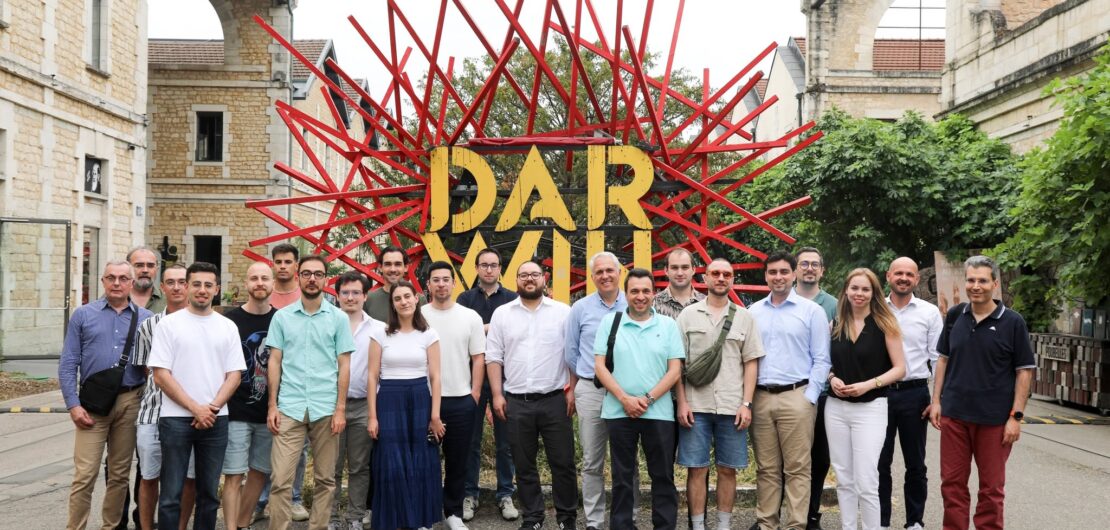
Take a glimpse into the highlights of the 8th SAFE-6G Plenary Meeting in Bordeaux, where project partners gathered to review the latest technical achievements, share progress across work packages, and strengthen collaboration as the project enters its final phase. The meeting provided an important opportunity to align upcoming milestones, validate key developments, and coordinate the final activities that will contribute to delivering secure, trustworthy, and resilient 6G solutions. Together, the consortium continues to drive innovation and shape the future of next-generation connectivity.

Uncategorized

Poster Session

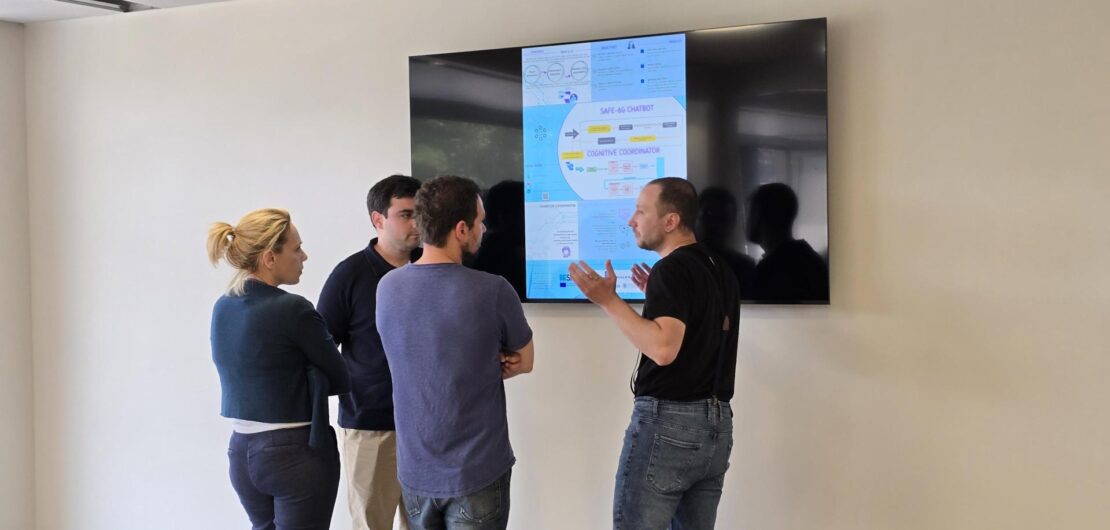
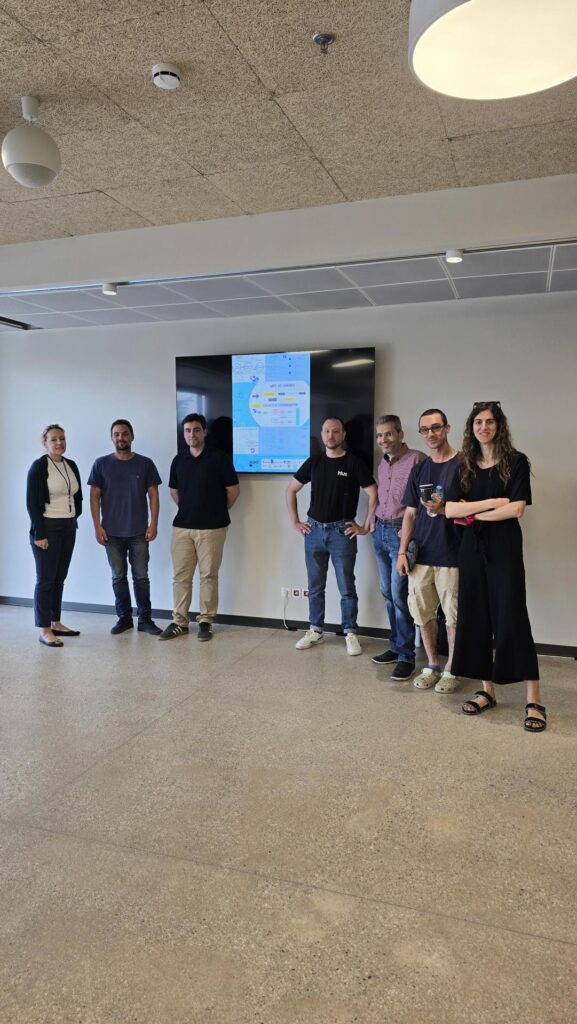
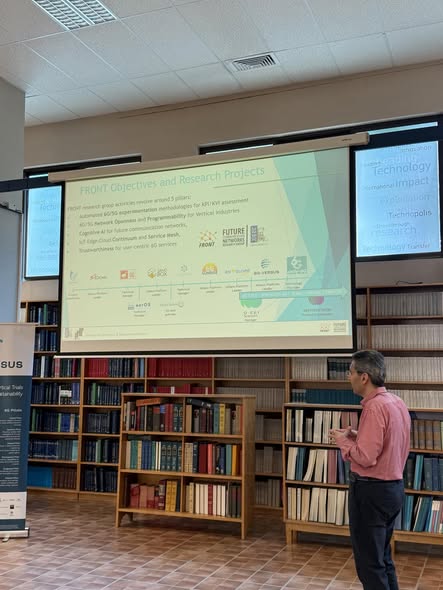
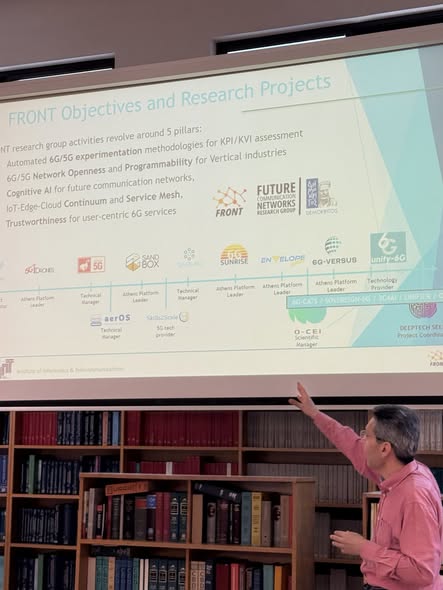
NCSRD and INFOLYSiS Partners presented the Cognitive Coordinator Poster at the new premises of NCSR Demokritos. Partners had the chance to present the Cognitive Coordinator function of our project in the researchers of NCSR Demokritos

Uncategorized

61st Summer School of the National Centre for Scientific…

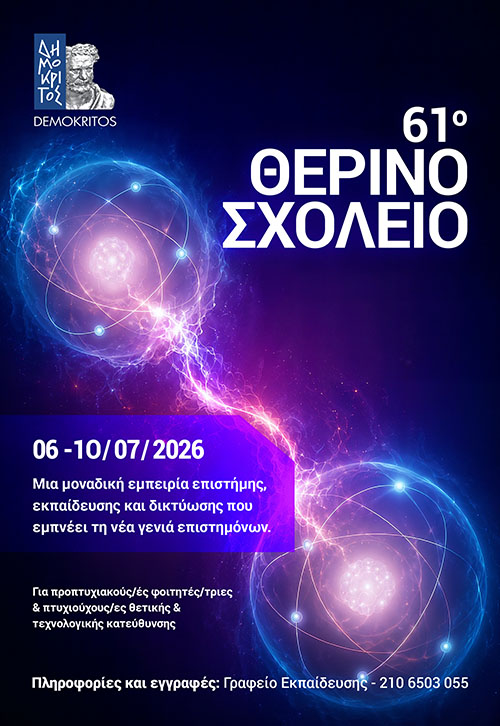
The 61st Summer School of the National Centre for Scientific Research “Demokritos” (NCSR Demokritos) will take place from 6 to 10 July 2026.

For one week, hundreds of undergraduate and postgraduate students in science and technology disciplines from universities across Greece will have the opportunity to experience research firsthand, receive specialized training, and network at the Centre’s facilities in Agia Paraskevi, Athens.

This year’s programme includes:

• Presentations by researchers from all Institutes of the Centre, including the newly established Institute of Quantum Computing and Quantum Technologies

• Poster sessions, where PhD candidates of the Centre will showcase their research work

• A speed mentoring session organized in collaboration with the Centre’s Gender Equality and Anti-Discrimination Committee

• Guided tours of laboratories and research infrastructures

• Information sessions on postgraduate studies and scholarship opportunities offered by various foundations and organizations in Greece

• Workshops, seminars, and a dedicated Career Day

The Summer School is a long-standing institution that, for six decades, has inspired, educated, and actively supported the next generation of scientists in Greece.

For more information and registration:  summerschool.demokritos.gr

Registration deadline: 25 June 2026

Uncategorized

Trials and Pilots Brochure No.2

The Smart Networks and Services Joint Undertaking (SNS JU) is advancing Europe’s connectivity ambitions through its Trials and Pilots (T&Ps), a key instrument under Horizon Europe. These initiatives are designed to validate advanced and Beyond 5G (B5G) and pre-6G technologies in real operational environments, with a strong focus on strategic vertical sectors that are critical to Europe’s digital and green transitions. By concentrating efforts on a limited number of verticals per project, the SNS JU ensures greater depth of validation, measurable performance outcomes, and clearer pathways towards market adoption and standardisation.

To date, the SNS JU has funded 80 projects in total since 2022, through its first three Calls for Action, while an additional 20 projects are expected to start shortly, funded under SNS Calls 4 and 5. SNS JU enters its final phase in 2026 and will conclude its operations through the funding of an additional number of projects through Call 6 (2026) and Call 7 (2027), with an additional total funding of more than €250 million. As the programme matures, so do the projects, delivering more advanced and mature Trials & Pilots, bringing cutting-edge 5G and 5G-Advanced enabled technologies and solutions closer to real-world implementation. This progress further highlights the importance of the T&P Brochure as a snapshot of the experimentation efforts of the SNS JU projects, tracking year-on-year progress and developments.

The portfolio of SNS JU projects is organised into specific Streams and Strands, including Stream A, “Smart communication components, systems and networks for 5G mid-term Evolution systems” – included only in Call 1 – Stream B, “Research for revolutionary technology advancement towards 6G” / “6G Enabling Technologies”, Stream C, “SNS experimental infrastructures”, Stream D, “Large-Scale SNS Trials and Pilots”, and Coordination and Support Actions (CSAs). The T&P Brochure, naturally, focuses on SNS JU Stream D projects as their core focal point was large-scale experimentation, even including Open Calls to extend and complement their vertical use cases, without however excluding mature experimental efforts from other streams.

The first edition of the SNS JU Trials and Pilots Brochure was released at an early stage, in May 2025, and featured a total of eight selected T&Ps. It built on the highly successful experience of the EC H2020 5G Infrastructure Public Private Partnership (PPP), which produced a series of five impactful T&P brochures. In parallel, drawing on the PPP Verticals Cartography experience, the SNS JU also developed (and continues to develop) the Verticals Engagement Tracker (VET) to monitor activities across vertical sectors.

The process for the second SNS JU Trials and Pilots Brochure was launched in January 2026, aggregating information from SNS JU Project Trials & Pilots, including network architecture, deployment details, key results obtained, and innovative features enabled by 5G-Advanced / B5G, and emerging 6G technologies. The information collected highlights the benefits and added value delivered by 5G Advanced / B5G and 6G networks, enabling novel and innovative services and applications not possible to be supported with previous generation networks.

A total of 28 Trials & Pilots were received by SNS JU projects for the second edition of the brochure and were evaluated by the appointed evaluation committee comprised of experts of varying background representing key bodies of the SNS JU ecosystem, including the SNS JU Office and the European Commission, the 6G-IA, the SNS JU Steering Board and Technology Board leaders, as well as SNS JU Working Group leaders.

The selected 12 T&Ps featured in this second edition of the T&Ps Brochure are the top-ranked submissions, representing scientific excellence, real-world deployment, and realistic problem-solving in the field, validating B5G/6G enabled solutions of a high maturity level. Importantly, the featured T&Ps demonstrate strong social relevance, economic potential, and/or the validation of ground-breaking services and applications, illustrating how 5G Advanced / B5G and 6G are driving innovation and impact.

Find it online here: https://smart-networks.europa.eu/wp-content/uploads/2026/06/tp-v8.pdf